


Empower yourself
with knowledge about
RAS in pancreatic cancer
Knowing your RAS status can help shape what comes next in your care
RAS in pancreatic cancer
- Every cell in the body contains a protein called RAS
- RAS tells cells when to start and stop growing
- Sometimes, RAS can become mutated. This can cause cells to grow out of control and can lead to cancer
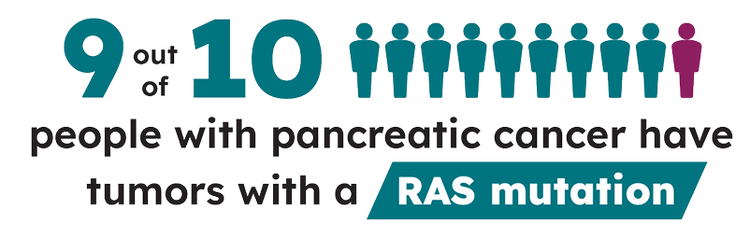



Targeting RAS is a major goal in pancreatic cancer research
- For almost 30 years, chemotherapy has been the main treatment for pancreatic cancer
- Researchers are currently making progress toward targeted treatments that focus on RAS
- Talk to your doctor about targeted treatment options that could be right for you
Find out if you have a RAS mutation
Tumor biomarker testing can tell if your pancreatic cancer has a RAS mutation. A tissue sample will be used to look for different biomarker mutations. Blood samples may also be used, but not as often.
Tumor biomarker testing and genetic testing: Understanding the difference
Genetic testing versus biomarker testing provides different information. It may be helpful to have both done. They are both key ways to know more about your cancer.

What is tumor biomarker testing?
- Tumor biomarker testing looks specifically at cancer cells to find certain types of mutations
- Tumor biomarker testing guides your treatment approach by helping your doctor identify which treatments could work best for your specific cancer

What is genetic testing?
- Genetic testing looks specifically at normal cells to identify the genes you were born with. It can find mutations in your genes, which can be passed down through your family
- BRCA testing is an example of genetic testing
- Genetic testing shows the inherited risk of developing cancer for you and your family
- In some cases, it can guide treatment decisions



Talk to your care team
Asking questions is a great way to take an active role in your care. The questions below are designed to help you get the conversation started.
Have I received biomarker testing of my tumor?
Has my tumor been checked for a RAS mutation?
Can we talk about other options, such as clinical trials?
Clinical trials
Interested in learning about clinical trials?
Consult with your care team about available clinical trials and decide together what may be an option for you. The following organizations can help you explore clinical trial options:


Pancreatic Cancer Action Network (PanCAN)
clinicaltrials.pancan.org


Let’s Win Pancreatic Cancer
letswinpc.org/treatments/finding-a-clinical-trial/
Clinical trials can provide access to more options that are currently not widely available.
Patient advocacy groups
You don’t have to face this diagnosis alone. Patient advocacy groups offer support, information, practical advice, and resources about financial assistance.
Pancreatic Cancer Action Network (PanCAN)
pancan.org
Let’s Win Pancreatic Cancer
letswinpc.org


KRAS Kickers
kraskickers.org
Connecting with these communities can help you navigate your pancreatic cancer.
These third-party resources are for your information only. Revolution Medicines does not endorse and is not responsible for the content included in these resources. Descriptions of resources are general and are summarized based on publicly available information provided by each organization.
